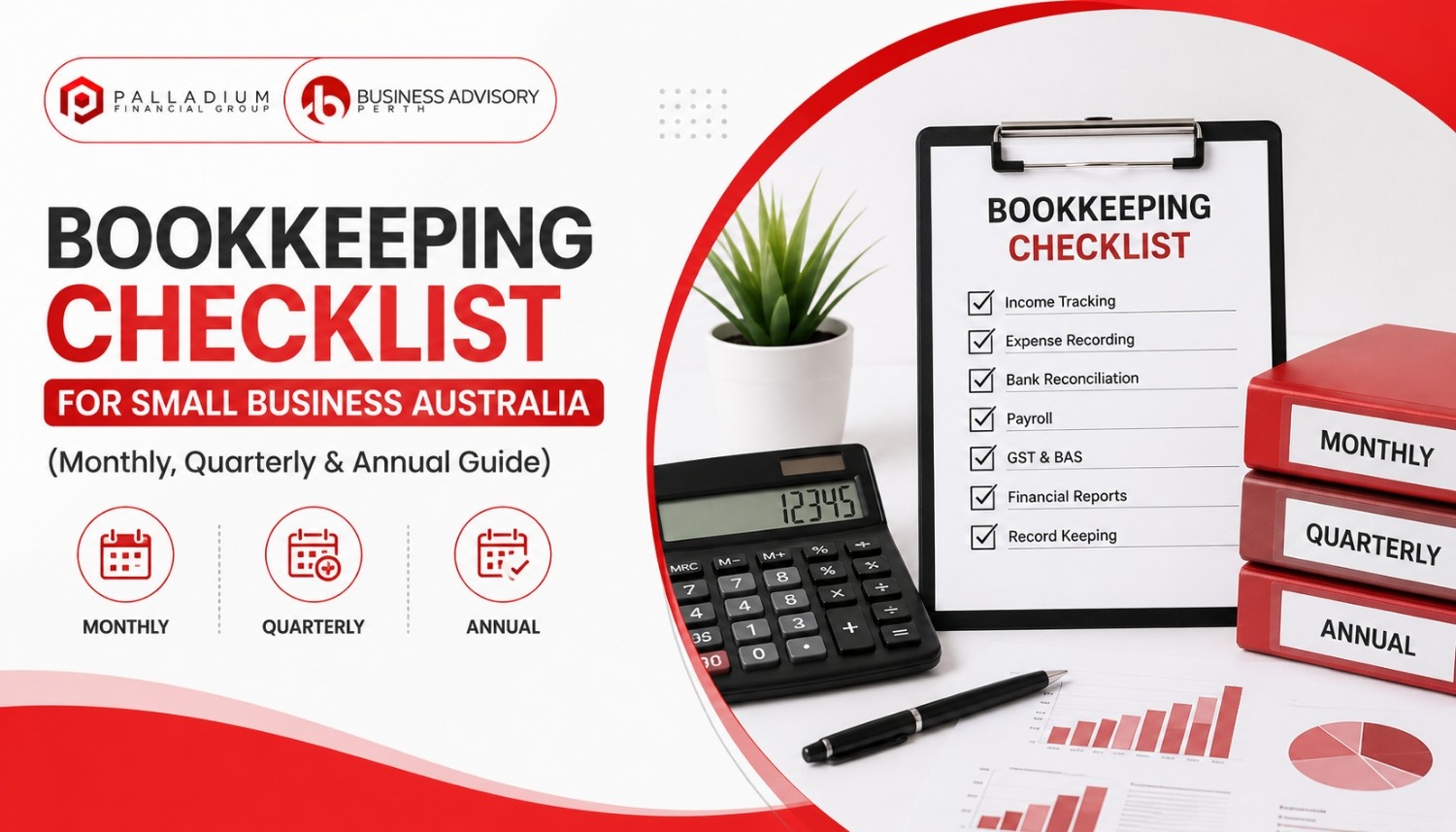
Operating a small business in Australia is far from simply selling and satisfying the needs of the customer base. From every receipt, invoice, payment, and banking transaction, the financial well-being of your enterprise accrues. In case you lack a structured system of accounting, you risk losing track of all expenditures, overlooking taxes, and making financial errors.
Following a structured bookkeeping checklist for small business Australia helps business owners stay compliant with Australian Taxation Office (ATO) requirements while giving them a clear picture of their financial performance throughout the year.
From a sole proprietor to a partnership or even a growing firm, this resource provides you with all the necessary bookkeeping tasks you must perform on a monthly, quarterly and annual basis.
Why Bookkeeping Matters for Australian Small Businesses
Bookkeeping is the process of recording, organising and maintaining your financial transactions. While many business owners focus on tax time, bookkeeping should be viewed as an ongoing activity rather than a once-a-year task.
Accurate financial records help you:
- Track income and expenses
- Monitor profitability
- Prepare BAS and tax returns
- Improve budgeting decisions
- Identify cash shortages early
- Support loan or finance applications
- Meet ATO record-keeping obligations
More importantly, consistent bookkeeping allows you to make informed business decisions based on real financial data rather than assumptions.
Monthly Bookkeeping Checklist
Monthly bookkeeping keeps your financial records current and prevents work from piling up at the end of the financial year.
1. Record All Income
Ensure every sale and payment is recorded correctly.
This includes:
- Customer invoices
- Cash sales
- Online payments
- EFTPOS transactions
- Bank deposits
Missing income entries can create discrepancies between your accounting software and bank records.
2. Organise Business Expenses
Record every legitimate business expense as it occurs.
Examples include:
- Office supplies
- Vehicle expenses
- Marketing costs
- Software subscriptions
- Utilities
- Rent
- Insurance
Keeping digital copies of receipts makes tax preparation much easier and supports ATO compliance.
3. Reconcile Bank Accounts
Compare your accounting records against your bank statements each month.
Bank reconciliation helps identify:
- Duplicate transactions
- Missing deposits
- Bank fees
- Incorrect entries
- Unauthorised transactions
Regular reconciliation improves the accuracy of your financial reports and reduces bookkeeping errors.
Learn more about professional account reconciliation services to ensure your records remain accurate throughout the year.
4. Review Accounts Receivable
Outstanding invoices can significantly impact business cash flow.
Each month:
- Review unpaid invoices
- Send payment reminders
- Follow up overdue accounts
- Update customer payment records
The faster invoices are collected, the healthier your business finances remain.
5. Pay Supplier Bills
Monitor outstanding supplier invoices and pay them before due dates whenever possible.
Late payments may lead to:
- Late fees
- Damaged supplier relationships
- Cash flow pressure
Maintaining good supplier relationships often results in better payment terms and ongoing business support.
6. Check Payroll Records
If you employ staff, review payroll every pay cycle.
Confirm:
- Employee wages
- Superannuation
- PAYG withholding
- Leave balances
- Payroll tax (where applicable)
Accurate payroll records reduce compliance risks and improve employee confidence.
7. Review Business Cash Position
Knowing your available cash is just as important as knowing your profit.
Analyse:
- Bank balances
- Upcoming expenses
- Expected customer payments
- Seasonal fluctuations
Businesses that actively monitor their finances are generally better prepared for unexpected expenses.
Professional cash flow management services can help businesses forecast future cash requirements and avoid financial pressure during slower trading periods.
8. Back Up Financial Records
Whether using cloud accounting software or desktop systems, maintain secure backups of your financial records.
Include:
- Invoices
- Receipts
- Payroll reports
- Financial statements
- Customer records
Australian businesses are generally required to retain financial records for several years under ATO guidelines.
Quarterly Bookkeeping Checklist
Quarterly bookkeeping focuses on compliance and financial performance.
1. Prepare and Lodge BAS
If your business is registered for GST, you’ll usually need to prepare and lodge your Business Activity Statement (BAS).
Review:
- GST collected
- GST paid
- PAYG withholding
- PAYG instalments
Always verify figures before submitting your BAS.
2. Review Profit and Loss Reports
Your Profit and Loss Statement shows whether your business is generating sustainable profits.
Look for:
- Revenue trends
- Increasing expenses
- Gross profit margin
- Operating costs
Understanding these reports helps identify areas where profitability can improve.
3. Review the Balance Sheet
Your Balance Sheet provides a snapshot of your business’s financial position.
It includes:
- Assets
- Liabilities
- Owner’s equity
Reviewing this report quarterly helps identify changes in debt levels and overall financial stability.
4. Update Business Budget
Business conditions change throughout the year.
Review your budget by comparing:
- Actual income
- Actual expenses
- Forecast revenue
- Planned investments
Adjust your budget based on current performance rather than relying solely on annual projections.
5. Review Inventory (If Applicable)
Businesses selling products should reconcile inventory regularly.
Check:
- Stock quantities
- Damaged goods
- Slow-moving inventory
- Stock valuation
Accurate inventory records improve reporting accuracy and purchasing decisions.
6. Review Business Performance
Bookkeeping isn’t just about compliance.
Quarterly financial reviews help identify:
- Best-selling products
- High operating costs
- Seasonal trends
- Growth opportunities
Many successful businesses combine bookkeeping with strategic business advisory Perth support to better understand financial performance and future planning.
Annual Bookkeeping Checklist
The end of the financial year is the perfect opportunity to ensure every financial record is complete before tax preparation.
1. Complete Final Bank Reconciliations
Ensure every bank account has been reconciled through 30 June.
Investigate:
- Outstanding transactions
- Missing receipts
- Duplicate entries
- Incorrect allocations
This significantly reduces delays during tax preparation.
2. Prepare Financial Statements
Annual financial reports typically include:
- Profit and Loss Statement
- Balance Sheet
- Cash Flow Statement
These reports provide a complete overview of business performance over the financial year.
3. Review Fixed Assets
Check your asset register for:
- New equipment
- Disposals
- Depreciation
- Vehicle purchases
Accurate asset records ensure correct tax treatment.
4. Confirm Payroll Obligations
Before year-end, ensure:
- Payroll reports are complete
- Super contributions have been processed
- Employee payment summaries are accurate
- STP reporting requirements are satisfied
Payroll compliance reduces the likelihood of reporting issues later.
5. Organise Supporting Documents
Gather all financial documentation, including:
- Supplier invoices
- Customer invoices
- Loan statements
- Insurance records
- Vehicle logbooks
- Bank statements
Well-organised records simplify tax preparation and reduce accountant queries.
6. Review Business Goals
The financial year isn’t just about tax compliance.
Use bookkeeping reports to evaluate:
- Revenue growth
- Profitability
- Cost control
- Customer trends
- Business expansion opportunities
Financial records provide valuable insights for future planning.
Many growing businesses work with experienced small business
accountants Perth to interpret financial reports and identify opportunities for sustainable growth.
Common Bookkeeping Mistakes to Avoid
Even organised businesses can make bookkeeping mistakes.
Some of the most common include:
- Mixing personal and business expenses
- Losing receipts
- Delaying transaction entries
- Ignoring overdue invoices
- Forgetting bank reconciliation
- Misclassifying expenses
- Missing BAS deadlines
- Not backing up financial records
Small mistakes often become larger problems when left unresolved for several months.
Bookkeeping Software Can Make the Process Easier
Cloud accounting software has simplified bookkeeping for Australian businesses.
Popular features include:
- Automatic bank feeds
- Invoice creation
- Expense tracking
- Payroll integration
- GST reporting
- Financial dashboards
- Receipt scanning
While software saves time, it still requires regular review to ensure transactions are categorised correctly.
When Should You Hire a Professional Bookkeeper?
As your business grows, bookkeeping becomes increasingly complex.
Consider professional support if you:
- Spend too much time on bookkeeping
- Frequently fall behind on financial records
- Employ staff
- Need regular BAS lodgements
- Have multiple bank accounts
- Want more accurate financial reporting
Reliable bookkeeping services Perth can help business owners stay compliant while freeing up valuable time to focus on serving customers and growing the business.
Bookkeeping Is More Than Compliance
Many business owners see bookkeeping as simply a tax requirement. In reality, it’s one of the most valuable business management tools available.
Accurate bookkeeping enables you to:
- Make informed financial decisions
- Understand business performance
- Plan future investments
- Reduce unnecessary expenses
- Improve financial confidence
It also provides early warning signs when revenue declines or operating costs begin increasing unexpectedly.
Understanding your financial data is one of the best ways to overcome common small business challenges before they become major obstacles.
Final Thoughts
Maintaining accurate financial records doesn’t need to be overwhelming. By following a structured monthly, quarterly and annual bookkeeping routine, Australian small business owners can stay organised, meet ATO obligations and make smarter financial decisions throughout the year.
A consistent bookkeeping process not only improves compliance but also provides valuable insights that support long-term business success. As your business grows, reviewing your financial information regularly will help you identify trends, manage expenses and make confident decisions based on reliable data.
If your goal is to improve financial efficiency and discover how to grow small business sustainably, building strong bookkeeping habits is one of the smartest investments you can make today.